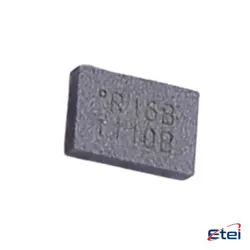
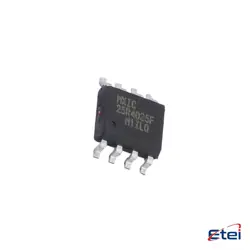
Abbildungen dienen nur als Referenz
X9C103SIZT1
+StücklisteIC DGTL POT 10KOHM 100TAP 8SOIC
-
HerstellerRenesas Electronics America Inc.
-
Herstellerteil #X9C103SIZT1
-
Paket SOP-8
-
Auf Lager7700
365 Tage Qualitätsgarantie
7*24 Stunden-Servicegarantie
90-Tage Kundendienstgarantie
Originalproduktgarantie
Spezifikationen
| Attribut | Wert |
| Package | Tape & Reel (TR),Cut Tape (CT) |
| Series | XDCP™ |
| ProductStatus | Active |
| Taper | Linear |
| Configuration | Potentiometer |
| NumberofCircuits | 1 |
| NumberofTaps | 100 |
| Resistance(Ohms) | 10k |
| Interface | Up/Down (U/D, INC, CS) |
| MemoryType | Non-Volatile |
| Voltage-Supply | 5V |
| Tolerance | ±20% |
| TemperatureCoefficient(Typ) | ±300ppm/°C |
| MountingType | Surface Mount |
| SupplierDevicePackage | 8-SOIC |
| Package/Case | 8-SOIC (0.154, 3.90mm Width) |
| OperatingTemperature | -40°C ~ 85°C |
Übersicht
Description
Key features include:
- Resistance Range: Typically, it offers a range of up to 10 kΩ.
- Resolution: Provides 99 discrete steps of resistance adjustment.
- Interface: Controlled via a simple up/down interface, making it easy to integrate with microcontrollers.
- Non-volatile Memory: It retains its resistance setting even when powered off, thanks to its non-volatile wiper storage.
- Low Power Consumption: Designed for efficient power use, suitable for battery-operated devices.
- Compact Package: Available in small, surface-mount packages for space-constrained applications.
Common applications include audio equipment, instrumentation, and automatic gain control systems where precise and repeatable resistance adjustments are necessary. The X9C103SIZT1 enables designers to implement adaptable and easily tunable electronic systems.
Equivalent
1. Microchip MCP4131-103E/P
2. ADI AD5160BRJZ10
3. Maxim Integrated DS1803-010
These components offer similar functionality with varying specifications such as resistance value, tolerance, and interface options. Always verify compatibility with your specific application requirements.
Features
1. Resolution: It provides 100 tap points, which equates to a resolution of 1% across the total resistance range.
2. Resistance Value: It typically offers a resistance value of 10 kΩ, though models with other resistance values may be available.
3. Non-Volatile Memory: It retains the wiper setting in non-volatile memory, ensuring the setting is preserved even when power is removed.
4. Low Power Consumption: The device is designed for low power applications, with minimal current consumption in standby mode.
5. Serial Interface: Utilizes a simple 3-wire up/down serial interface for communication, making it easy to integrate with microcontrollers.
6. Compact Package: Available in a small, convenient package suitable for space-constrained applications.
7. Wide Supply Voltage Range: Operates over a broad supply voltage range, enhancing flexibility for various applications.
These features make the X9C103SIZT1 suitable for applications requiring precise resistance adjustment, such as audio equipment, sensor calibration, and other analog signal processing tasks.
Pinout
1. VCC: Power supply pin.
2. GND: Ground pin.
3. SCL: Serial Clock Input; used to shift in data.
4. SDA: Serial Data Input/Output; used for data input and output.
5. INC: Increment control pin; changes the wiper position when activated.
6. U/D: Up/Down control pin; determines the direction of wiper movement.
7. CS: Chip Select; enables the device for operation.
8. VW: Wiper terminal; connects to the wiper of the potentiometer.
The X9C103SIZT1 allows for precise adjustment of resistance values in electronic circuits, making it suitable for applications such as gain adjustment, offset trimming, or other parameter adjustments in analog circuits.
Manufacturer
Application
1. Volume Control: Used in audio equipment for adjusting sound levels.
2. Brightness and Contrast Adjustment: Utilized in displays and lighting systems for fine-tuning visual outputs.
3. Sensor Calibration: Employed in sensor arrays to calibrate and adjust sensitivity settings.
4. Control Systems: Used in feedback loops and control systems for tuning and optimization.
5. Automated Test Equipment (ATE): Integrated in testing setups for precise resistance adjustments.
6. Variable Gain Amplifiers: Used to control gain levels dynamically in amplifiers.
These applications leverage the device's ability to provide precise, repeatable resistance changes with digital control.