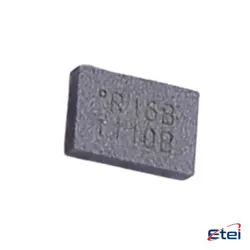
Abbildungen dienen nur als Referenz
XC7A35T-2FTG256C
+StücklisteIC FPGA 170 I/O 256FTBGA
-
HerstellerAMD Xilinx
-
Herstellerteil #XC7A35T-2FTG256C
-
Paket LBGA-256
-
Auf Lager7765
365 Tage Qualitätsgarantie
7*24 Stunden-Servicegarantie
90-Tage Kundendienstgarantie
Originalproduktgarantie
Spezifikationen
| Attribut | Wert |
| Package | Tray |
| Series | Artix-7 |
| ProductStatus | Active |
| NumberofLABs/CLBs | 2600 |
| NumberofLogicElements/Cells | 33280 |
| TotalRAMBits | 1843200 |
| NumberofI/O | 170 |
| Voltage-Supply | 0.95V ~ 1.05V |
| MountingType | Surface Mount |
| OperatingTemperature | 0°C ~ 85°C (TJ) |
| Package/Case | 256-LBGA |
Übersicht
Description
Key features include a high-speed serial transceiver, abundant I/O options, and support for various logic interfaces, which enhance its versatility. The "-2" in the part number indicates its speed grade, optimizing it for moderate to high-speed applications while maintaining energy efficiency.
This FPGA is built on a 28nm process technology, ensuring a balance between power consumption and performance. It's widely used in sectors like telecommunications, automotive, and industrial automation, where compact, efficient, and adaptable hardware solutions are essential. The XC7A35T-2FTG256C is supported by Xilinx's Vivado Design Suite, facilitating robust design and implementation processes.
Equivalent
1. Intel's Cyclone V series (e.g., 5CEFA4F31C8)
2. Microsemi's IGLOO2 series (e.g., M2GL050)
3. Lattice's ECP5 series (e.g., LFE5UM-45F)
These alternatives offer similar performance and capabilities, though specific features and pin configurations may vary. Always consult detailed datasheets for precise comparisons.
Features
1. Logic Cells: 33,280 logic cells for versatile design capabilities.
2. Configurable Logic Blocks (CLBs): 5,200 CLBs, each containing slice elements for building logic.
3. DSP Slices: 90 DSP slices for efficient signal processing.
4. Block RAM: Approximately 1,800 Kb of block RAM for data storage.
5. I/O Pins: 150 user I/O pins available for interfacing.
6. Clock Management: Includes clock management tiles with phase-locked loops (PLLs) for precise clock control.
7. Packaging: Available in a 256-ball fine-pitch ball grid array (FTG256) package.
8. Performance: -2 speed grade, balancing performance and power efficiency.
9. Power Supply: Core voltage of 1.0V, with flexibility in I/O standards.
10. Applications: Suitable for cost-sensitive applications like embedded systems, communications, and low-cost wireless solutions.
These features make the XC7A35T ideal for high-performance, cost-efficient applications that require a balance of logic density, memory, and DSP capabilities.
Pinout
Key functions and features include:
1. Logic Cells: It has approximately 33,280 logic cells, making it suitable for various digital logic applications.
2. I/O Pins: The device offers a significant number of General-Purpose I/O pins, which can be configured for various signal standards.
3. Memory: Includes block RAM and distributed RAM options for versatile data storage.
4. DSP Slices: It contains DSP slices for efficient implementation of signal processing tasks.
5. Clock Management: Features advanced clock management tiles with PLLs and MMCMs for precise clocking.
6. Connectivity: Supports various connectivity standards, including high-speed serial interfaces.
The Artix-7 series is often used in applications requiring a balance of performance, power efficiency, and cost, such as communications, automotive, and consumer electronics.
Manufacturer
Application
1. Communications: Used in wireless and wired communication systems for signal processing and protocol implementation.
2. Industrial Automation: Employed in control systems and automation for real-time processing tasks.
3. Automotive: Integrated into advanced driver-assistance systems (ADAS) and infotainment for processing and interfacing.
4. Consumer Electronics: Utilized in devices requiring high-speed data processing and connectivity.
5. Medical Devices: Applied in imaging and diagnostic equipment for data handling and image processing.
The FPGA's adaptability and efficient power-performance ratio make it suitable for diverse, resource-constrained applications.