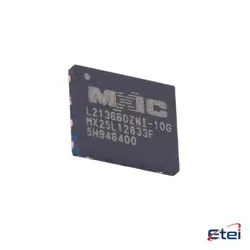
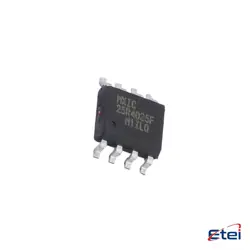
Abbildungen dienen nur als Referenz
EP4CE22F17C8N
+StücklisteIC FPGA 153 I/O 256FBGA
-
HerstellerIntel
-
Herstellerteil #EP4CE22F17C8N
-
Paket FBGA-256
-
Auf Lager1545
365 Tage Qualitätsgarantie
7*24 Stunden-Servicegarantie
90-Tage Kundendienstgarantie
Originalproduktgarantie
Spezifikationen
| Attribut | Wert |
| Package / Case | Tray |
| Series | Cyclone® IV E |
| Part Status | Active |
| Number of LABs/CLBs | 1395 |
| Number of Logic Elements/Cells | 22320 |
| Total RAM Bits | 608256 |
| Number of I/O | 153 |
| Voltage - Supply | 1.15V ~ 1.25V |
| Mounting Type | Surface Mount |
| Operating Temperature | 0°C ~ 85°C (TJ) |
Übersicht
Description
Key specifications include 586 user I/Os for versatile interfacing, and a total of 594 embedded multipliers useful for digital signal processing tasks. The device supports multiple I/O standards and protocols, enhancing its adaptability in diverse system environments. It operates at a core voltage of 1.2V and is housed in a compact 256-pin FBGA package, well-suited for space-constrained designs.
The Cyclone IV series, including the EP4CE22F17C8N, is appreciated for its ease of use, supported by Intel's Quartus Prime software for efficient design and deployment. These FPGAs are often chosen for their affordability, power efficiency, and robust performance capabilities.
Equivalent
1. Xilinx Spartan-6 series, such as the XC6SLX25.
2. Lattice Semiconductor's ECP5 series, like the LFE5U-25F.
3. Microsemi (Microchip) IGLOO2 or SmartFusion2 series with similar specifications.
These alternatives offer different ecosystems and toolchains but are similar in terms of performance and capacity.
Features
The FPGA contains 153 user I/O pins, accommodating diverse interfacing needs. It operates with a core voltage of 1.2V, but its I/O banks can support various voltage standards, enhancing compatibility with different systems. The package type is FBGA with dimensions of 17x17 mm, providing a compact form factor for system integration.
This Cyclone IV device offers low power consumption, making it suitable for cost-sensitive and portable applications. It supports multiple configuration schemes, including JTAG and AS (Active Serial), for flexible programming. The EP4CE22F17C8N is commonly used in applications such as communications, consumer electronics, and industrial automation, where efficiency and reliability are critical.
Pinout
The device offers a range of I/O features, including support for diverse I/O standards, PLLs for clock management, and embedded memory blocks. It is often used in applications requiring low power consumption and cost-effectiveness, such as in consumer electronics, industrial control, and communications equipment. The specific pin assignments and functions can be configured using Intel's Quartus Prime software, allowing designers to tailor the FPGA's functionality to their specific needs.
Manufacturer
Intel Corporation is a multinational technology company headquartered in Santa Clara, California. It is one of the world's largest and most well-known semiconductor manufacturers. Intel is renowned for its processors, which power a significant portion of personal computers and servers globally. The company also engages in the development and manufacturing of other semiconductor products, including chipsets, integrated graphics, network interface controllers, solid-state drives, and various other devices related to computing and communications.
Intel operates in a highly competitive industry, constantly innovating to maintain its market position and meet the demands of various technological advances. Its acquisition of Altera and other strategic moves in the semiconductor space underscore its commitment to broadening its product portfolio and capabilities in areas beyond its core CPU business, including FPGAs, artificial intelligence, and data centers.
Application
1. Embedded Systems: Used for processing tasks and integrating various components in embedded applications.
2. Industrial Automation: Facilitates real-time processing and control in automation systems.
3. Communication Systems: Implements protocols and data processing for networking equipment.
4. Consumer Electronics: Powers customizable and adaptive features in consumer devices.
5. Signal Processing: Handles complex algorithms in audio, video, and data signal processing.
6. Prototyping: Allows for rapid design and testing of digital circuits and systems.
Its versatility makes it suitable for a wide range of custom digital applications.