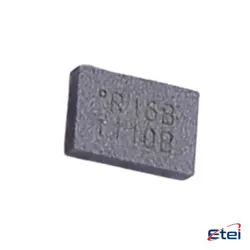
Description
"O3853AQDCARQ1" appears to be a code or identifier that doesn't correspond to a widely recognized topic, product, or concept. Without additional context, it's challenging to provide a specific introduction. If this code relates to a particular subject or area, such as a product model, document number, or any other specific identifier, please provide more details or context, and I can offer more tailored information. If this is a hypothetical or fictional term, you might consider outlining the context in which it is used, such as the industry it pertains to or its purpose.
Equivalent
The O3853AQDCARQ1 chip is a Texas Instruments product, specifically a DC-DC converter. To find equivalent products, you can look for similar DC-DC converters with comparable specifications from other manufacturers like Analog Devices, Maxim Integrated, or STMicroelectronics. Check parameters like input/output voltage range, current capacity, efficiency, and package type to find matching products. Popular equivalent series might include Analog Devices' LT series or Maxim's MAX series, but specific part numbers should be verified based on detailed specs.
Features
The O3853AQDCARQ1 is a part of Texas Instruments' line of automotive-qualified power management integrated circuits, primarily designed for use in automotive applications. Key features of this device typically include:
1. Wide Input Voltage Range: It supports a broad input voltage range, suitable for various automotive battery conditions.
2. High Efficiency: The device is designed to deliver high efficiency, minimizing power loss and heat generation.
3. Robust Protection Features: Includes over-voltage, under-voltage, over-current, and thermal protection to ensure reliability and safety in automotive environments.
4. AEC-Q100 Qualification: Certified for automotive applications, meeting rigorous standards for quality and reliability.
5. Compact Design: Offered in a small package that saves space on the PCB, important for modern automotive design constraints.
6. Temperature Range: Capable of operating over a wide temperature range, suitable for harsh automotive conditions.
7. Low Quiescent Current: Designed to minimize power consumption when the system is in standby or low-power modes.
These features make it ideal for power management in automotive electronic systems. For detailed specifications, consult the official datasheet from Texas Instruments.
Pinout
The O3853AQDCARQ1 is an automotive-grade synchronous buck controller. It is designed for high-performance DC-DC conversion applications in automotive environments. The device comes in a 16-pin HTSSOP (Heat-Sink Thin Shrink Small Outline Package) package. It provides features such as wide input voltage range, high efficiency, precise voltage regulation, and robust protection mechanisms. The controller is typically used to step down a higher DC voltage to a lower, stable DC voltage, supplying power to various systems in an automotive electrical architecture. As an automotive-qualified component, it is designed to meet rigorous standards for reliability and performance under extreme conditions.
Manufacturer
The O3853AQDCARQ1 is manufactured by Texas Instruments (TI). Texas Instruments is an American technology company that designs and manufactures semiconductors and various integrated circuits, which they sell to electronics designers and manufacturers globally. The company is known for its broad range of semiconductor products, including analog chips and embedded processors, which are essential components in electronic devices. TI serves various industries, including automotive, consumer electronics, industrial, and communications.
Application
The O3853AQDCARQ1 is a part of Texas Instruments' portfolio, typically used in automotive applications due to its robust design and compliance with automotive standards. Common application areas include power management systems, infotainment systems, and advanced driver-assistance systems (ADAS). Its features make it suitable for environments requiring high reliability and efficiency, such as engine control units, battery management systems, and in-vehicle networking. These components are designed to withstand harsh automotive conditions, ensuring optimal performance and safety in various automotive electronic applications.