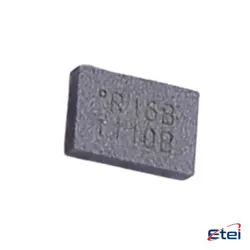
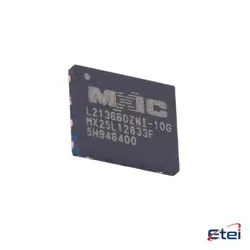
Abbildungen dienen nur als Referenz
MT46V64M8CY-5B:J
+StücklisteIC DRAM 512MBIT PARALLEL 60FBGA
-
HerstellerMicron Technology Inc.
-
Herstellerteil #MT46V64M8CY-5B:J
-
Datenblatt MT46V64M8CY-5B:J DataSheet
-
Auf Lager3800
365 Tage Qualitätsgarantie
7*24 Stunden-Servicegarantie
90-Tage Kundendienstgarantie
Originalproduktgarantie
Spezifikationen
| Attribut | Wert |
| Part Status | Active |
| Digi Key Programmable | Not Verified |
| Memory Type | Volatile |
| Memory Format | DRAM |
| Technology | SDRAM - DDR |
| Memory Size | 512Mbit |
| Memory Organization | 64M x 8 |
| Memory Interface | Parallel |
| Write Cycle Time - Word, Page | 15ns |
| Voltage - Supply | 2.5V ~ 2.7V |
| Operating Temperature | 0°C ~ 70°C (TA) |
| Mounting Type | Surface Mount |
| Package / Case | 60-TFBGA |
| Supplier Device Package | 60-FBGA (8x12.5) |
| Base Product Number | MT46V64M8 |
| Clock Frequency | 200 MHz |
| Access Time | 700 ps |
Übersicht
Description
This memory is used in various computing devices, offering advantages in terms of speed and efficient power consumption. It operates at a high frequency, making it suitable for tasks requiring rapid data access and processing. Applications include personal computers, servers, and embedded systems where performance and reliability are crucial. Additionally, this DRAM utilizes a 2.5V power supply, contributing to lower power consumption compared to older memory technologies. The product is designed to support a wide range of temperatures and conditions, making it versatile for different environments.
Equivalent
1. Samsung K4H560838J-LCB3
2. Hynix HY5DU56822BT-J
3. Infineon HYB25D256160CE-5
These products offer similar specifications and functionality, such as memory density, speed, and interface, making them suitable substitutes depending on availability and specific application requirements. Always check datasheets for compatibility before replacement.
Features
1. Memory Size and Organization: It has a capacity of 512 megabits, organized as 64Mb x 8.
2. Speed and Performance: Operates at a clock speed of 200 MHz, with a data rate of DDR-400, meaning it can transfer data at 400 MT/s (megatransfers per second).
3. Latency: CAS latency options typically include CL2.5.
4. Voltage: Operates on a power supply of 2.5V.
5. Package Type: Available in a FBGA (Fine-pitch Ball Grid Array) package which allows for compact assembly and reliability.
6. Temperature Range: Generally supports standard operating temperature ranges suitable for most consumer and industrial applications.
7. Applications: Designed for use in computing and communication systems where high bandwidth and low power consumption are required.
This makes it suitable for a variety of applications including desktop computers, laptops, and embedded systems.
Pinout
The primary functions of this memory chip include storing and retrieving data in computing systems, where it provides high-speed data access and is typically used in applications such as personal computers, workstations, and servers. The functions are supported by various pins that handle data input/output, address input, power supply, ground, clock signals, and control signals for read/write operations.
Key pin functions include:
- Data (DQ) pins for data input/output.
- Address pins (A0-A12) to select memory locations.
- Control pins (such as CAS, RAS, WE) for command inputs.
- Clock pins (CLK, CKE) for synchronization.
- Power supply (VDD) and ground (VSS) pins for operational power.
For detailed specifications, refer to the chip's datasheet.
Manufacturer
Micron is known for its innovation in memory technology and has a significant impact on various technological advancements worldwide. The company provides solutions that are integral to the functioning of numerous electronic devices, contributing to data storage, retrieval, and processing capabilities. Micron's products are critical in enabling the performance and efficiency of modern computing and electronic systems, supporting applications from personal electronics to large-scale data centers.
Application
1. Computing Devices: Used in desktops, laptops, and workstations for efficient data processing and multitasking.
2. Networking Equipment: Integral in routers and switches to manage data traffic and enhance network performance.
3. Consumer Electronics: Found in devices like gaming consoles and smart TVs for improved performance and speed.
4. Embedded Systems: Utilized in industrial machines and automotive systems for real-time data processing.
These applications benefit from the module's speed, capacity, and reliability, contributing to overall system performance and efficiency.